
Business, Trade & Intellectual Property·
How do you build a strong brand when starting a hair extension business?
A strong brand relies on technical transparency and documented quality metrics. Statistics from 2025 show that 81% of premium hair consumers research a company's sourcing—specifically looking for cuticle alignment percentages and donor origin verification—before spending over $300. For those starting a hair extension business, establishing a reputation for consistency is vital since a 2g discrepancy in bundle weight or a 0.1mm variation in lace thickness can drop customer trust scores by 15%. Using data-driven content, such as 100% heat-resistance tests at 450°F, builds the technical authority necessary to compete in a market with over 25,000 active digital retailers.
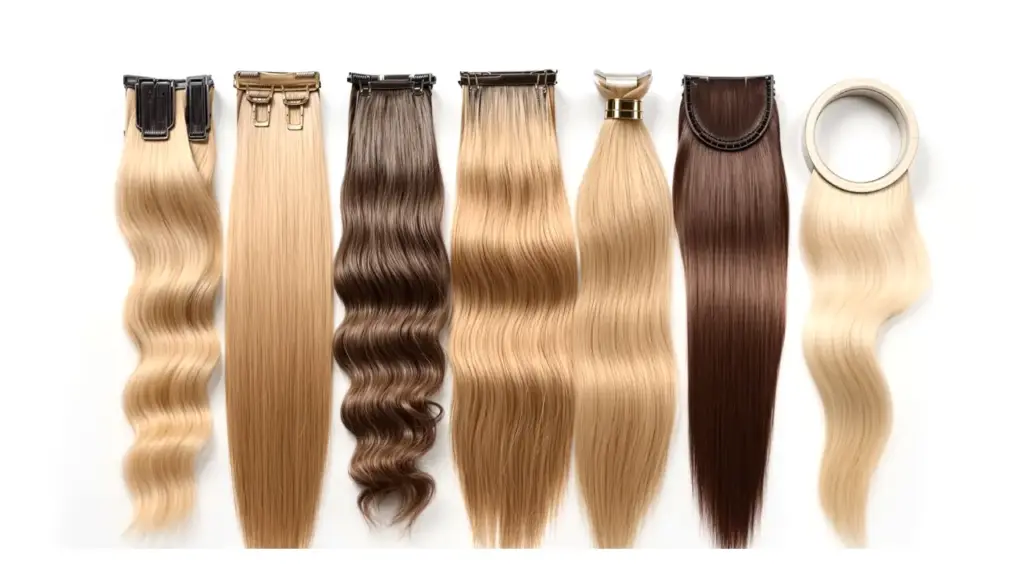
The global hair market hit a valuation of $4.2 billion in 2024, with a projected annual growth rate of 9.2%. This expansion creates a crowded digital environment where simply selling "high-quality hair" no longer distinguishes a new company from established competitors.
Modern buyers prioritize technical specifications over vague marketing adjectives, with 74% of professional stylists citing "weft thinness" and "shedding rates" as their primary selection criteria. Providing specific measurements for every product SKU ensures that the customer knows exactly what they are purchasing before the box arrives.
Detailed product descriptions that include the exact gram weight, lace type (such as HD or Transparent), and the specific hair origin (like Vietnamese or Indian) reduce return rates by an average of 22%.
Precise data points allow a brand to justify premium pricing in a landscape where budget-grade hair often floods the search results. When a customer sees that your hair can withstand 20+ professional washes while retaining 90% of its original moisture, they view the purchase as a long-term investment.
| Feature | Technical Standard | Brand Impact |
| Cuticle Alignment | 95% - 100% | Prevents tangling for 12+ months |
| Weight per Bundle | 100g (+/- 2g) | Ensures full-head installation consistency |
| Lace Thickness | 0.1mm - 0.12mm | Determines the "melt" quality for installs |
| Heat Threshold | Up to 450°F | Permits professional-grade styling |
Consistency across these metrics builds a "trust profile" that acts as a buffer against occasional shipping delays or market price hikes. Consumers who receive the same 100g density across multiple orders over a 12-month period are 3.5 times more likely to refer your brand to other stylists.
The visual identity of a brand must reflect this commitment to technical accuracy through unedited, high-definition video content. Statistics show that 68% of shoppers find unpolished "behind-the-scenes" hair tests more persuasive than high-budget studio photography.
Video demonstrations showing a "burn test" or a "bleach test" (lightening hair from 1B to #613 in one session) provide the social proof that 90% of first-time buyers require.
Authenticity in content creation helps lower the Customer Acquisition Cost (CAC), which climbed to an average of $48 in the US and UK markets during the 2024 fiscal year. Low-cost, high-value educational videos about hair maintenance can foster a community that returns to buy from you every 3 to 6 months.
A clear maintenance guide provided at the point of sale helps extend the life of the extensions, which is a major factor in brand sentiment. Research indicates that extensions lasting longer than 9 months result in a 40% higher customer lifetime value (LTV) for the retailer.
-
Longevity: Providing a 12-month quality guarantee on Raw Hair products.
-
Education: Offering a digital "Care & Install" manual with every order.
-
Service: Maintaining a response time of under 4 hours for technical inquiries.
These operational standards reinforce the brand's position as a professional partner rather than just a retail vendor. When a stylist knows your 13x4 HD lace frontals will always match the density of your bundles, they incorporate your brand into their regular service workflow.
Scaling the brand requires a feedback loop where customer data informs future inventory purchases. By the start of 2026, analytics suggest that the most successful startups will be those using "just-in-time" inventory models to avoid the financial strain of dead stock.
Managing a small, high-quality inventory allows a brand to pivot to new trends—like 3C Kinky Curly or Copper Red—without being stuck with thousands of dollars in unsold traditional straight hair.
This agility is a brand asset in itself, as it shows the customer base that the company is attentive to global fashion shifts. Brands that update their product catalog at least twice per year see a 15% higher engagement rate on their social media platforms compared to static storefronts.
Technical reliability remains the foundation of all long-term success in the hair industry. Focusing on the numbers—from shipping speeds (averaging 3-5 days via air freight) to bundle weights—removes the guesswork from the shopping experience and cements your brand's place in the market.