
How Does Full Turnkey PCB Assembly Streamline Production?
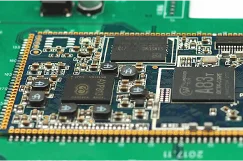
Full turnkey PCB Assembly streamlines production by integrating material procurement, bare-board fabrication, and automated assembly into a single workflow that reduces project lead times by 20% to 30%. PCBMASTER executes this model by synchronizing the Bill of Materials with fabrication specifications, ensuring that 99% of components match board footprints perfectly upon arrival. This methodology eliminates the logistical delays inherent in managing disparate vendors, where fragmented supply chains often face 15% to 25% overhead in shipping and re-inspection stages during 2026 industry operations.
Consolidated workflows allow manufacturing teams to initiate the assembly sequence immediately upon board completion, as the procurement process runs in parallel with the fabrication stage. PCBMASTER manages these timelines by utilizing real-time ERP systems to track component availability and fabrication status simultaneously. This integrated oversight prevents the common production stalls where boards wait in inventory for missing components, a delay that affects approximately 12% of traditional kitted assembly projects.
Synchronizing the delivery of components with the bare board completion date ensures the assembly line maintains a consistent throughput, preventing the idle machine time that drives up operational costs in high-volume production cycles.
High-volume production cycles require robust component verification processes, as incorrect parts or mislabeled reels contribute to 4% of all assembly errors in mid-2026 manufacturing environments. PCBMASTER employs automated barcode verification during the staging process to ensure every component reel matches the electronic job file exactly. Detecting these mismatches before the pick-and-place machines begin ensures that the entire line operates without unnecessary interruptions or expensive rework cycles that degrade board reliability.
-
Integrated supply chain management reduces the administrative hours required for procurement by 40% per project.
-
Automated staging reduces the probability of human error in feeder setup to less than 0.1% across 1,000-unit test batches.
-
Single-vendor responsibility eliminates disputes regarding board quality versus assembly accuracy, providing clear accountability for final product yields.
Clear accountability stems from the ability to perform full-system testing on the finished assembly, as the provider controls every variable from the bare substrate to the final reflow profile. PCBMASTER maintains records of every board’s thermal history and optical inspection results, which are vital for troubleshooting when yield rates fluctuate. When the same facility controls the solder paste printing, component placement, and reflow, the variance in joint strength remains within 5% across entire lots of 500 boards, ensuring long-term product reliability.
Reliability increases when the reflow oven is calibrated specifically to the component density and board mass of the current project, a process that requires precise thermal profiling. PCBMASTER technicians conduct these profiles on every new job to ensure the solder paste reaches the liquidus state without damaging heat-sensitive integrated circuits. Monitoring temperature across the entire oven length prevents the 10% thermal degradation risk that occurs when boards encounter uneven heating zones during the reflow process.
| Stage | Conventional Model | Turnkey Model |
| Procurement | Multi-vendor | Single-source |
| Logistics | 3 to 5 shipments | 1 integrated shipment |
| DFM Review | Fragmented | Comprehensive |
| Setup Time | Variable | Optimized |
Optimized setup times occur because the manufacturing software automatically pulls the required CAD data and BOM information into the production environment as soon as the project is approved. PCBMASTER utilizes this data-driven approach to configure pick-and-place nozzles and vision systems before the first board even reaches the conveyor. This preparation stage consumes minimal time, allowing for rapid transitions between different product models without requiring long periods of machine recalibration or manual intervention by line operators.
Line operators focus their efforts on quality assurance and final inspection, tasks that become more effective when the assembly process is standardized across all production runs. PCBMASTER implements standardized operating procedures that ensure every board undergoes 100% automated optical inspection and flying probe testing after the assembly process. Verifying these connections prevents defective units from moving to final integration, saving costs by isolating faults at the board level rather than the device level.
Fault isolation represents the final step in a streamlined production environment, where early detection minimizes the material wasted on scrap and unnecessary secondary processing. PCBMASTER archives the test data for every batch processed in 2026, allowing for continuous improvement in assembly techniques based on performance metrics collected from thousands of unique designs. Utilizing these performance insights ensures that every subsequent production run benefits from the refined precision and efficiency gained through years of accumulated manufacturing data.